
Why construction projects go over budget is a question that comes up in almost every construction business, and the answer is rarely as simple as a single mistake. Construction projects rarely fail because of a single major error. In most cases, everything appears to be under control at the beginning. The estimate is approved, the scope is defined, and the expected margin looks reasonable. From a planning perspective, the project seems viable.
However, the reality on-site tends to evolve differently. Instead of a sudden failure, what typically happens is a gradual deviation from the original plan. Costs begin to increase in small increments, timelines stretch slightly, and decisions are made in real time that were not accounted for in the initial estimate. These changes are often subtle and go unnoticed in the moment, but over time they accumulate and lead to construction cost overruns.
This pattern is consistent across the industry, from small residential builds to large-scale infrastructure. A well-known example is the Sydney Light Rail project in Australia. It was introduced as a major transport solution for Sydney, with a clear scope, timeline, and budget. However, as construction progressed, the project encountered significant challenges, including design issues, contractor disputes, delays, and ongoing variations. What started as a controlled and viable project quickly turned into one affected by major cost overruns in construction.
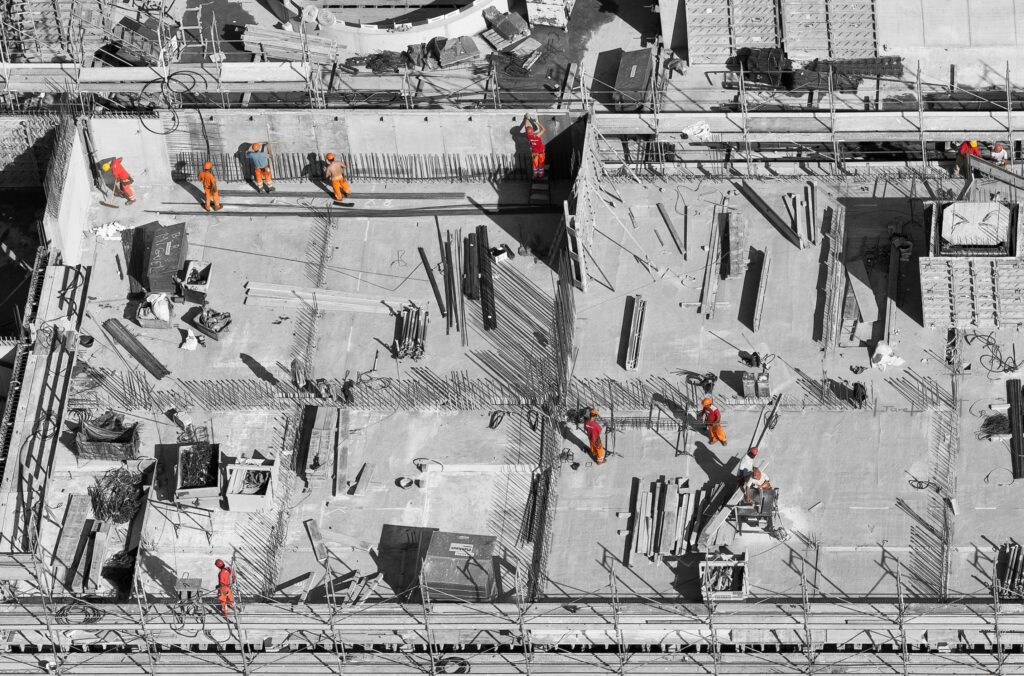
By the time it was completed, the final cost had increased substantially beyond the original estimate, along with a much longer delivery timeline. What makes this example relevant is not just the scale, but the pattern. The project did not fail because of a single major mistake. Instead, costs increased gradually as issues emerged, decisions were made on-site, and control over real-time costs was limited.
This outcome is not unusual. In fact, it reflects a broader issue within construction: we almost always underestimate the true cost of projects, and the consequences of these miscalculations can be substantial.
The most common causes of budget overruns in construction
While every project has its own challenges, the reasons why construction projects go over budget tend to follow similar patterns. These are not isolated incidents but recurring issues that affect construction cost control and overall profitability.
One of the primary problems is the lack of visibility over costs during the execution phase. Labour hours may increase slightly, materials may need to be reordered, and subcontractor expenses may shift. None of these changes seem critical on their own, but without continuous monitoring, they combine into a significant financial impact and lead to construction profit loss.
Another contributing factor is delayed cost tracking. In many cases, financial data is reviewed periodically, such as at the end of the week or month. While this provides an accurate record of what has already happened, it does not allow for timely intervention. By the time an issue is identified, it is often too late to correct it effectively. This is where poor job cost tracking becomes a major risk.
Variations and scope changes also play a major role. Construction projects rarely proceed exactly as planned. Adjustments are made on-site, additional work is requested, and unforeseen conditions require changes in approach. If these variations are not documented and costed immediately, they reduce the project’s profitability without being fully accounted for.
Labour overruns are another frequent issue. A small increase in daily working hours or a drop in productivity may not raise immediate concerns, but over the duration of a project, these differences can significantly affect the overall cost structure and lead to serious labour overruns in construction.
Material costs add further pressure. Prices fluctuate, waste occurs, and procurement decisions are not always optimal. Individually, these factors may seem minor, but collectively they contribute to material cost overruns and budget issues.
The role of uncertainty in construction projects
From an engineering perspective, cost estimation is inherently uncertain. At the early stages of a project, many critical variables are still unknown. Site conditions may differ from initial assessments, market prices may change, and project timelines may extend beyond expectations.
I have personally worked on projects where cost estimates were developed based on the best available data at the time, yet still proved to be inaccurate. Estimating the cost of a construction project is a complex process that involves a significant degree of uncertainty.
However, uncertainty alone does not explain why projects consistently exceed their budgets. If uncertainty were the only factor, we would expect estimates to be equally likely to be over or under the final cost. In reality, the trend is overwhelmingly in one direction.
The real reason construction projects lose money
The consistent pattern of budget overruns points to a deeper issue: the lack of real-time cost control in construction during project execution.
Costs do not escalate all at once. They increase gradually as the project progresses. Without a system in place to track these changes as they occur, it becomes difficult to identify when the project is moving away from its budget.
As a result, financial problems are often only recognised after they have already impacted the outcome of the project.
How to prevent construction budget overruns
Addressing this issue requires a shift in focus from estimation to control. While accurate estimating remains important, it is not sufficient on its own. What ultimately determines the financial success of a project is how well costs are managed during execution.
The most effective approach is to track job costs in real time as the project progresses. This improves construction cost management, allowing project managers and business owners to identify deviations early, make informed decisions, and take corrective action before small issues become significant problems.
For a more detailed explanation of how this works in practice, you can explore how to track job costs in real time.
Conclusion
Construction projects go over budget for a variety of reasons, including limited visibility, delayed cost tracking, scope changes, labour overruns, and material cost fluctuations. While uncertainty in estimation plays a role, it is not the primary cause of financial failure.
The real issue lies in the inability to monitor and control costs effectively during the life of the project.
Improving visibility, strengthening construction cost control, and implementing real-time tracking can significantly reduce the risk of construction budget overruns and help ensure that projects remain profitable from start to finish.