
Know your committed cost
before the invoice lands.
Priced purchase orders and work orders commit their known value against the task when they are raised — so the forecast already knows about money you haven’t been billed for.
One project up to AU$1,000,000, with up to 25 tasks and subtasks, unlimited office users and three Mobile users. Full platform. No expiry — free until you start a second project. Consultation first, then we configure the account around your job.
Most overruns are already decided
By the time a supplier invoice arrives, the decision that caused it was made three weeks earlier. If your budget only moves when the invoice is coded, you’re watching a number that describes the past.
For priced orders, the unbilled value sits on the budget as committed cost. An unpriced order number carries attribution, but no committed value.
The order carries the attribution
Raised from the budget line
A purchase order is raised against the task it belongs to, so there’s no coding decision later and no guessing which job an invoice was for. Work orders to subcontractors work the same way.
Invoices land where they belong
The invoice comes in against the order, and the order is already against the task. Cost arrives on the right budget line without anyone deciding where it goes.
Stock, when you carry it
Material held internally and material reserved against a job, tracked so what’s on the shelf doesn’t get counted twice or forgotten.
Committed, then actual
Raise a priced order and its known value commits. Receipt the invoice against it and that portion becomes actual, against the same task. The unbilled balance stays committed.
Agree the work. Set the payment milestones.
Use work orders to set up subcontractor payment schedules tied to delivery milestones. Keep the order attributed to the task it belongs to, with the commitment visible against the work in your project budget.
Payments linked to delivery
Set up the milestone payment schedule for larger subcontract packages on desktop. Give the project and commercial teams an agreed basis for discussing what is to be delivered and which milestone a payment relates to.
Retention you still owe your subbies
Track the retention held from subcontractors and still owed to them. Keep it distinct from retention your client holds from you, and from the unbilled balance of the work order.
How does a work order affect the project cost?
Raising a priced work order records its known value as a commitment against its task. As invoices are received against the order, the invoiced amount becomes actual cost and the unbilled balance stays committed. Retention is money withheld from the subcontract value; it is not an extra cost added on top.
Keep the remaining commitment in view.
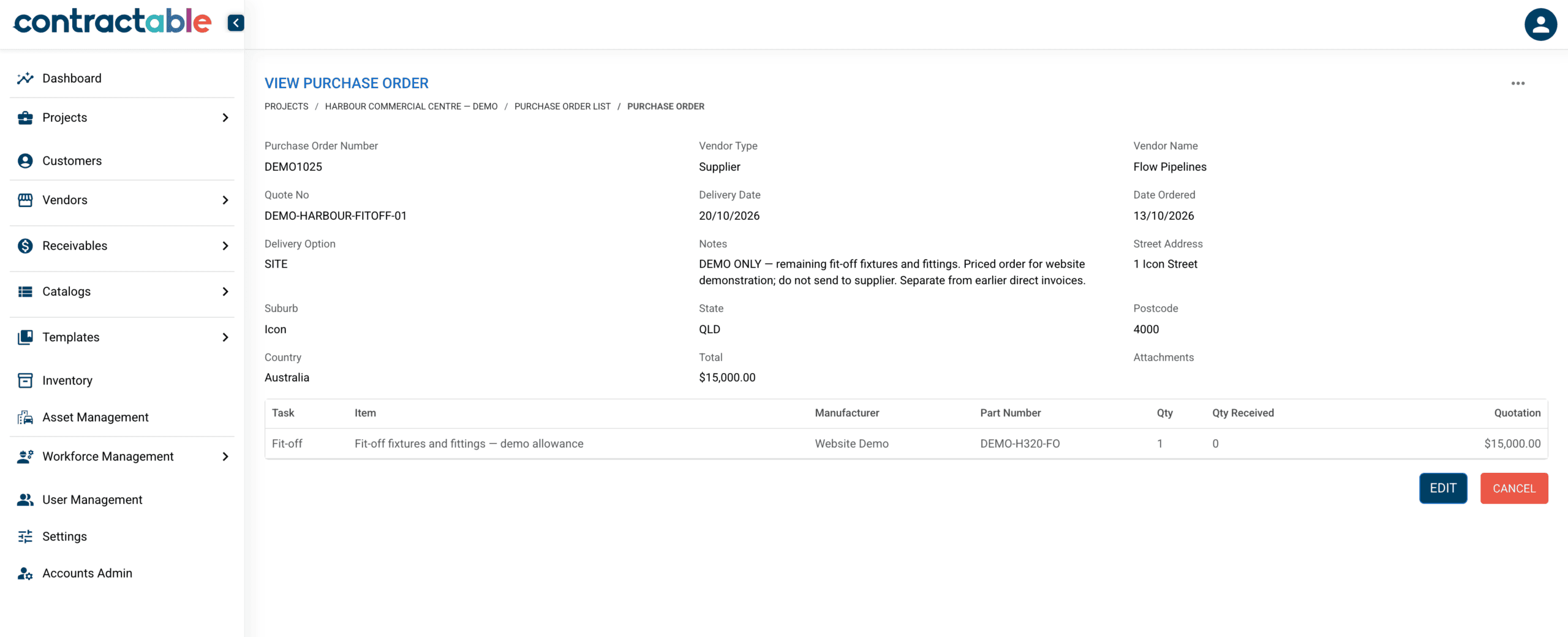
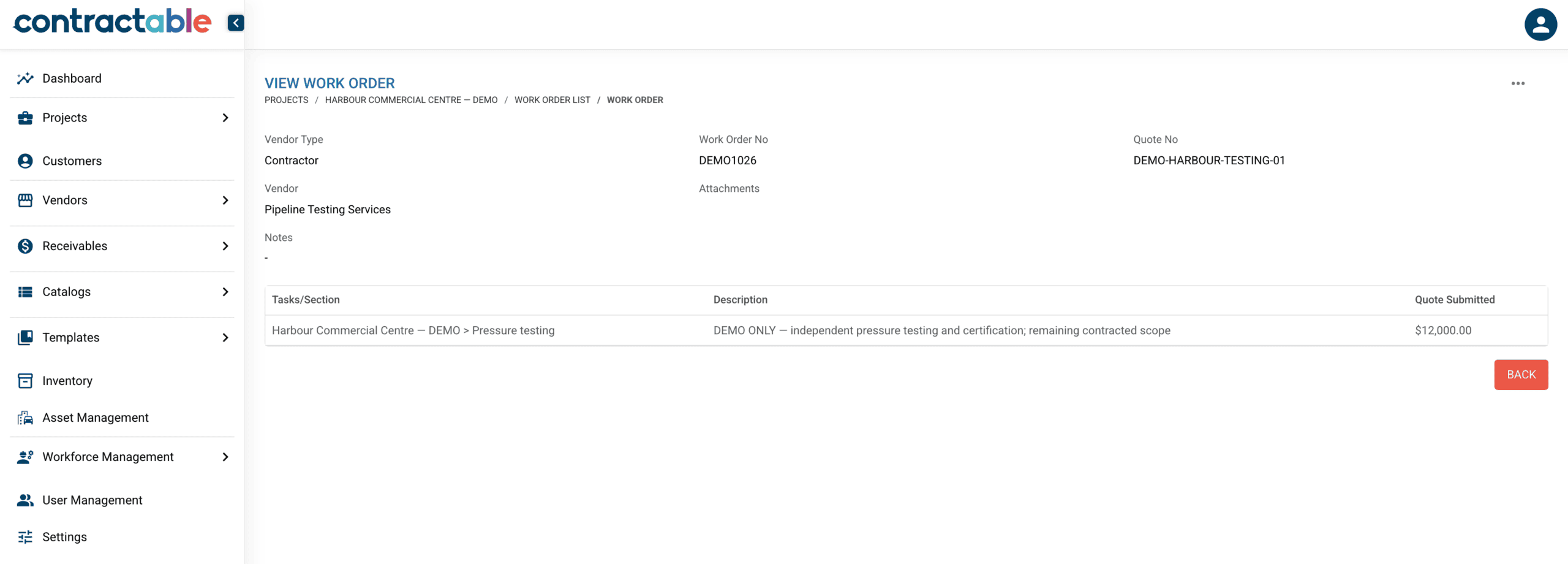
A partly invoiced order should separate what has already arrived as cost from what is still unbilled. This demonstration follows one purchase order and one work order against their project tasks.
$6,000 invoiced against the order.
$9,000 remains unbilled.
No invoice recorded against the order.
$12,000 remains unbilled.
Alongside $265,222.40 in actual cost, including the $6,000 PO invoice.
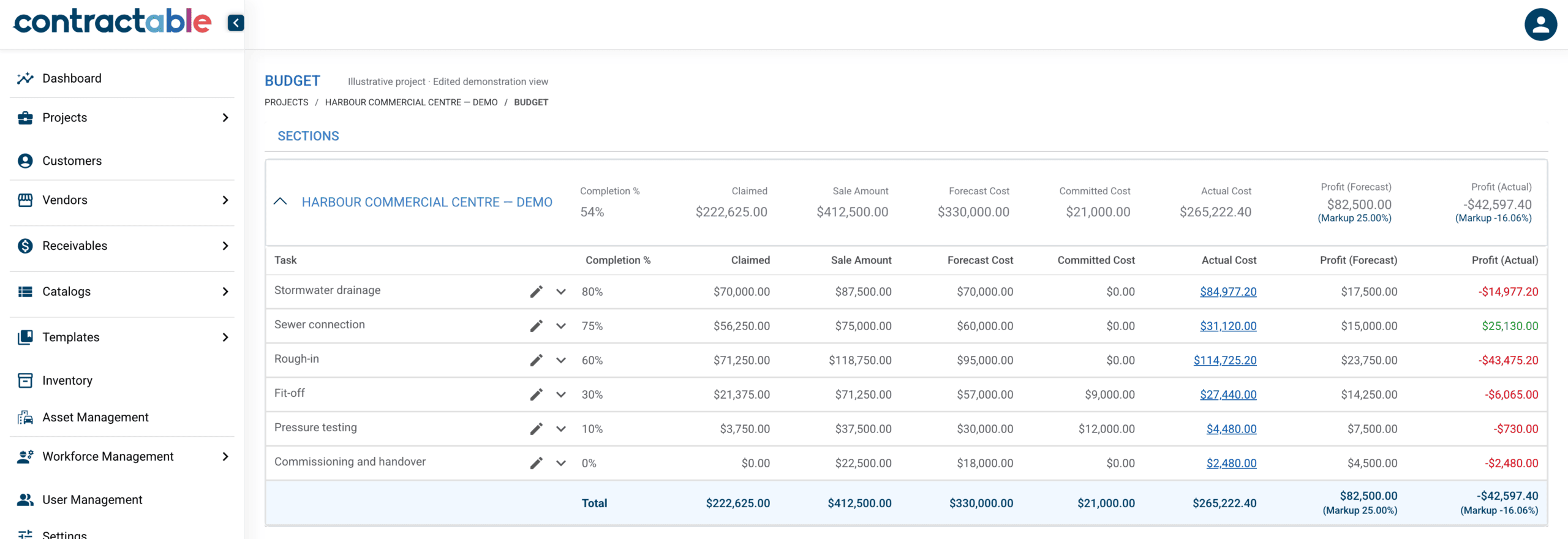
Stormwater drainage and Rough-in are already above forecast in this example. Review those overruns alongside the orders still to be invoiced before revising the forecast.
What purchasing managers ask
“We raise POs in our accounting system.”
You can keep doing that for general overhead. Project purchasing needs to hit the budget line, and that’s a different job.
“Our suppliers just send invoices.”
Then the order is where you take control back. It’s also the document that settles what was agreed when the price on the invoice doesn’t match.
Start with the job you are ordering for this week.
One project up to AU$1,000,000, with up to 25 tasks and subtasks, unlimited office users and three Mobile users. Full platform. No expiry — free until you start a second project. Consultation first, then we configure the account around your job.